Finding out your due date is one of those magic early-pregnancy moments where everything starts to feel real. Knowing what time of year you'll be going into labour makes it easier to imagine the bundle of joy waiting for you at the end of your journey.
Of course, it's also a reminder that you will need to do some preparation to make sure you're ready for the birth. Which leads us to a question that we hear from a lot of mums-to-be: just how accurate is my due date?
Your baby's first kicks are among the most magical parts of the pregnancy journey. But when can you expect to feel those tiny flutters for the first time?
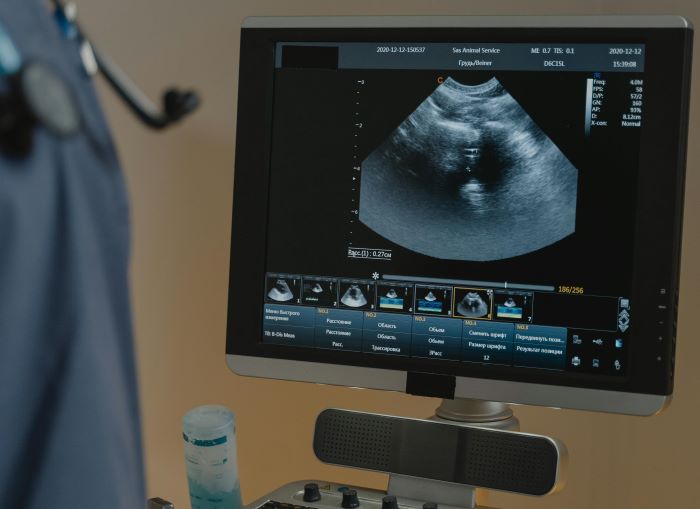
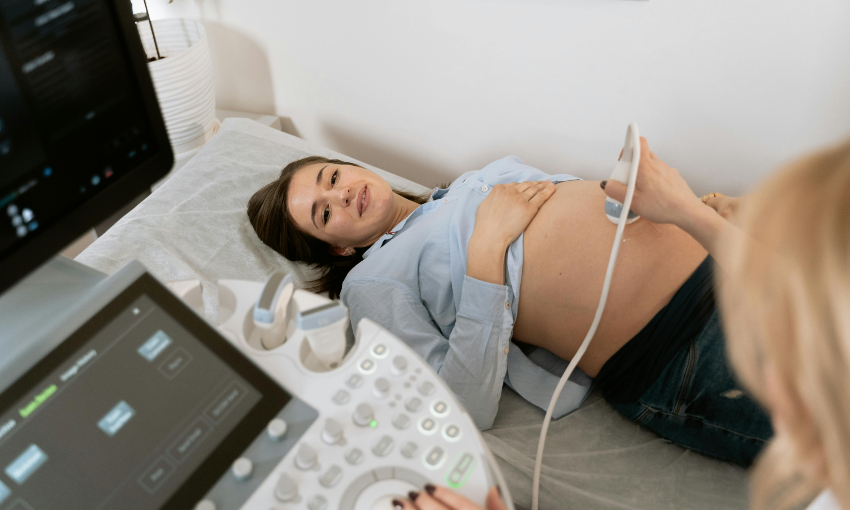
Ultrasound scans use sound waves to create a picture of your baby in the womb, but what else can they reveal?
In this blog post, we’ll go over the different things that an ultrasound scan can tell you about your pregnancy and discuss why ultrasound scans are such an essential part of prenatal care.
A presentation scan is a type of ultrasound scan that’s performed during pregnancy to check the baby’s position within the womb.
The positioning of your unborn child can have a big impact on how smoothly the birth goes. This is why a mum-to-be may choose to book a presentation scan toward the tail end of her pregnancy: to make sure her baby is in position for a healthy delivery.
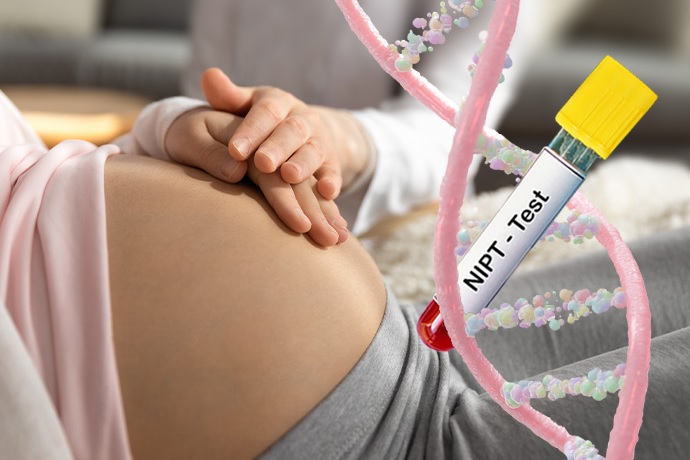
Non-invasive prenatal testing (NIPT), also known as cell-free DNA (cfDNA) screening, is a targeted antenatal screening test that looks for chromosomal abnormalities. These can determine whether the baby is likely to be affected by conditions like Down's syndrome, Edwards' syndrome or Patau's syndrome.
From your first ultrasound scan to the final push, pregnancy is a journey that's filled with excitement, anticipation, and a bit of nervousness - especially as your due date approaches. One of the best ways to prepare for the big day is by packing a hospital bag well in advance.
A baby bump is one of the most obvious outward signs of pregnancy, but when will it start to show? Read on to find out!
Finding out the gender of your baby is an exciting moment, and in recent years, having a gender reveal party to announce the sex of your baby has become increasingly popular. If you’re expecting and are looking for unique and exciting ways to announce the sex of your baby, you’re in the right place!