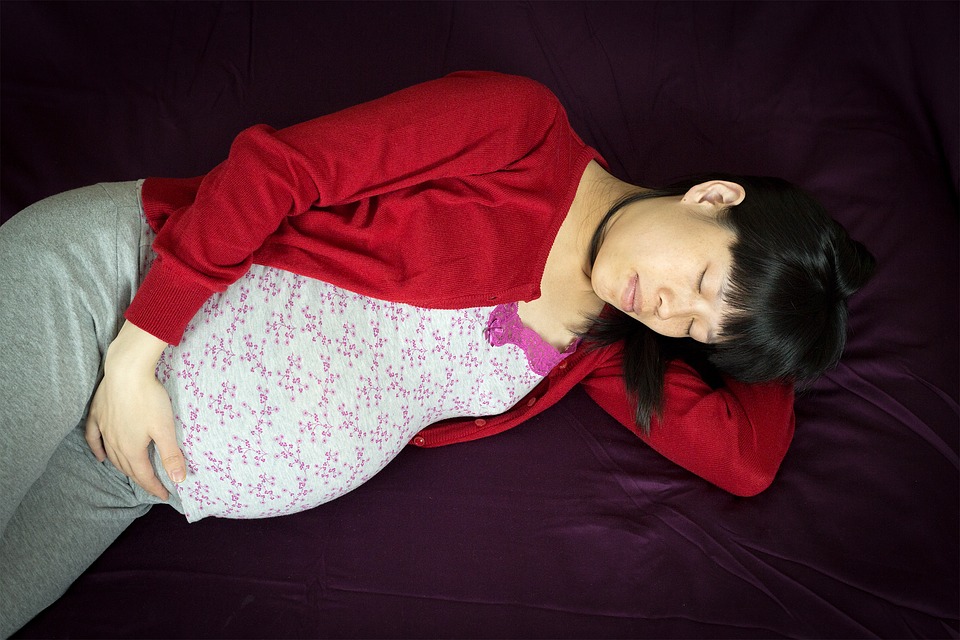
Getting the right amount of sleep or finding a way to fall to sleep can be a real struggle for any person, let alone if you’re an expecting mother. Methods that you have used to help you get a better quality of sleep in the past may no longer work now that you’re pregnant, so what are you to do now? Read on for our best tips for sleeping during pregnancy!
When you fall pregnant, your body will begin to change in a number of ways that can affect your quality of sleep. You may start to experience:
- Shortness of breath
- Back pain
- Heartburn
The good news about sleeping while pregnant is that you shouldn't have to adjust the way you sleep until you reach your second trimester. So, with these things in mind, let's take a look at some of the most common soon-to-be-mum approved sleeping positions!
Can I Sleep On My Back?
If you usually sleep on your back, you should be alright to continue for your first trimester, however, between 15 and 20 weeks gestation, the uterus grows big enough to start interfering with the flow of blood when sleeping on your back. At this stage, the uterus can begin to compress the inferior vena cava (IVC), as well as tightening the aorta, which blocks the main blood supply to your body and placenta. Therefore, sleeping on your back during this stage of your pregnancy can decrease the amount of blood returned to the heart, resulting in shortness of breath or an increased heart rate when waking up.
It is recommended that you limit how long you lay on your back after around 19 weeks to avoid a restriction in blood flow or oxygen to your baby.
Can I Sleep On My Front?
During the early stages of pregnancy, sleeping on your stomach is fine, but there will come a time where you will have to turn over, usually at around 16/18 weeks when your bump begins to show. Once your bump starts to show, sleeping on your stomach can become uncomfortable and also have safety implications, similar to sleeping flat on your back. Sleeping on your stomach can cause your bump to move inside the stomach and again press against the IVC and aorta, causing shortness of breath and a rapid heart beat as mentioned above.
Can I Sleep On My Side?
The best and most commonly used sleeping position among pregnant women is referred to as ‘SOS’, which stands for sleep on side. More specifically sleeping on your left side, as this will help increase the number of nutrients and blood that reach both the placenta and baby.
Sleeping on your right side can also compress the IVC, however, using pillows to prop up the uterus to prevent it sliding to the right can be helpful. It is not uncommon to fall asleep on your left side and wake up in a completely different position, on your back for example. If this does happen, there’s no need to worry as you probably weren’t in that position for very long. If you lay on your back during your third trimester, your blood flow will become compressed which will cause you to feel uncomfortable quite quickly, making you wake up. If you continue to wake up in a position other than your left side, ask your partner to check on you and move you back to your left side.
Other Pregnancy Sleeping Tips
- Sleep on your side with bent knees to relieve back pain and pressure on your uterus.
- Try placing a pillow between your legs to ease back pain.
- Try raising your upper body with pillows to help reduce heartburn.
- If you're suffering from swelling and leg pain, elevate your legs with pillows.
- Use a pillow under your side to raise your chest if you have shortness of breath.
For further information on how to sleep when pregnant, or if you are experiencing troubles sleeping, get in touch with a doctor as soon as possible. If you require a baby scan during any point of your pregnancy, be sure to browse from our range below!
Our Scan Packages >