Author: lauren

You’re not alone if you’ve experienced a little bit of bleeding your first trimester of pregnancy, 20% of pregnant women experience bleeding during the first 12 weeks according to Web MD, and a lot of the time there is no need for alarm.

However, bleeding can be a sign that something isn’t right, so it’s important that you know what could be causing you to bleed, and at what point you should call the doctor or hospital.

While we try to provide the most reliable information we can, if you do bleed during your pregnancy, we recommend that you get the opinion of a trained professional who can assess your individual circumstances.

Reasons you might experience some bleeding in your first trimester:

Implantation bleeding

As your embryo implants, you can experience some spotting. This happens around 6-12 days after you conceive, the bleeding should be incredibly light and last only a few hours or days at most.

Miscarriage

According to the information provided by the NHS, vaginal bleeding accompanied by cramping and pain in your lower abdomen can be a sign that you are miscarrying. Miscarriages occur in roughly 1 in 8 pregnancies. In most cases, the cause of a miscarriage is unknown and couldn’t have been prevented.

Ectopic Pregnancy

Ectopic pregnancy is when the embryo develops in the fallopian tube rather than in the womb. This type of pregnancy occurs in roughly 2% of pregnancies according to WebMD. We have a separate blog all about ectopic pregnancies that you can take a look at here:

Read our Ectopic Pregnancy Blog >

Reasons you might experience some bleeding in your second or third trimester:

Bleeding later on in your pregnancy can often be a sign of a more serious problem. We recommend going to the doctors or the hospital right away if you experience bleeding during your second or third trimester.

Placenta Previa

Placenta Previa is a condition where the placenta has moved or developed very low down in the uterus and can even completely cover the cervix. This condition occurs in roughly 2% of pregnancies & is often accompanied by heavy bleeding, stomach cramps and backache.

Placental Abruption

Bleeding or spotting in the late stages of your pregnancy might indicate that a placental abruption has occurred, this means that the placenta has completely detached from the wall of your uterus. This puts mum and baby a high risk as you are both losing blood very quickly. If you suspect this might be happening it is important that you seek immediate medical attention.

Premature Labour

If you are under 37 weeks pregnant and your bleeding is accompanied by regular contractions or a regular tightening sensation you might be going into premature labour. Other signs of premature labour include a “show” or mucus plug coming out of the vagina, or a gush or trickle of fluid (your waters breaking). If you experience any of these symptoms you should call your midwife or local maternity unit straight away.

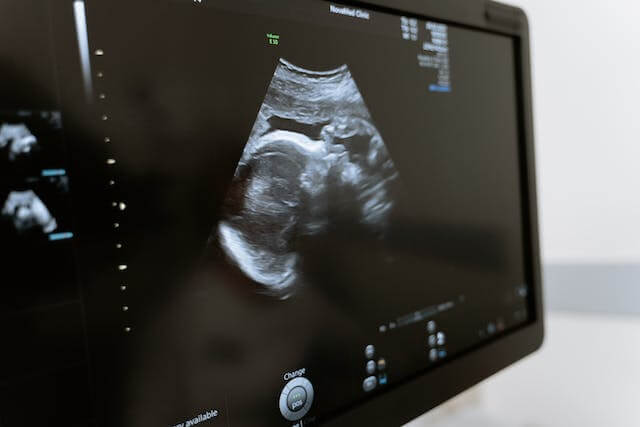
During any of our scans, our trained sonographers are able to provide medical advice and reassurance if you have experienced any bleeding during your pregnancy prior to attending. This information is easily passed onto the NHS if necessary.

Our EarlyReassure™ scan is ideal if you are seeking reassurance and advice before your first NHS scan, and is available from 8-13 weeks.
Book an EarlyReassure™ scan > 

3D scan at 16 weeks

3D and 4D ultrasound scans provide an exciting opportunity to get a clearer look at your baby and many parents-to-be simply can't wait to book one in. If you’re hoping to see your little one in 4D soon, here’s everything you need to know before you book.


Can I book a 4D scan at 16 weeks?

Unfortunately, at just 16 weeks gestation, your baby isn't big enough to be seen clearly via a 3D/4D scan. The best time to get a good view of your baby in this way is between 24 and 32 weeks.

Fortunately, there are still plenty of 2D scans available from 16 weeks and even earlier, so you can still check up on your little one and take home lots of lovely black and white images in the meantime.


How do 3D & 4D scans differ from 2D scans?

2D, 3D and 4D ultrasound scans all use sound waves to generate an image of your baby. But unlike 2D scans, 3D and 4D scans are able to capture three-dimensional images of your baby. A 3D scan is a still image and a 4D scan captures a video showing your baby moving around inside the womb.

3D and 4D scans aren’t typically available to mums until around 24 weeks because time needs to be allowed for your baby to grow and gain some weight. If you have a 3D or 4D scan earlier in your pregnancy, you might be disappointed by the results because your baby’s facial features won’t be fully developed yet.

What can I expect from a 2D ultrasound scan at 16 weeks?

At 16 weeks, a 2D ultrasound scan can tell you lots about your baby. The sonographer will be able to check on your baby's size and overall wellbeing, as well as determine their gender!

Here at First Encounters, we offer a brilliant range of 2D scans at 16 weeks gestation, including:

All scans are performed by trained sonographers in a comfortable and welcoming clinic environment. For more information, click on a scan or click the button below to book a scan.

Book a 2D Scan


What can I expect from a 4D Bonding & Reassurance scan at First Encounters?

Once you've reached 24-32 weeks gestation, you can book one of our incredible 4D scans. You and up to six guests can watch your unborn baby in motion. All of our 4D scans are displayed onto a large HD LED screen in our spacious scanning room while we capture stunning 3D photographs for you to keep.

After your scan, we will provide a digital copy of the images and videos we captured, so you can share them with friends and family.

If you want to hear a first-hand testimonial on our ultrasound scans from bump to baby, check out our Scans Throughout Pregnancy page where new mum Zoe and her partner Antony share their experiences!

If you want to find out what else is included in our 4D Bonding & Reassurance Scans, then please visit our website to find out more information and book yours today. 

Book a 3D/4D Scan   Contact First Encounters

Knowing when to take a pregnancy test to get the most accurate results can be difficult. If you are trying to get pregnant then you want to know as soon as possible! If you suspect you are unknowingly pregnant, confirming or disproving this is a priority.

When can I expect the most accurate results?

It is recommended that you wait one week until after you miss your expected period to achieve the most accurate result.

If I don’t want to wait?

If you can’t wait this long, it is recommended that you allow one to two weeks after you have had sex for detectable levels of HCG to build up in your system. Sensitive home pregnancy tests claim to be able to confirm pregnancy as early as 8 days after conception and can offer an estimation of when you conceived based on the amount of HCG present in your urine.

Be aware that the levels of HCG produced throughout pregnancy vary from woman to woman, so do not be disheartened by an early negative result if you are trying to conceive, you may still be pregnant!

If you or a friend has recently become pregnant, why not book in for an EarlyReassure™ scan? This reassurance and dating scan can be conducted at any time between 7 and 13 weeks and focuses on the development and wellbeing of your little one.

During the first few days of pregnancy, a fertilised embryo attaches to the uterine lining and your body begins to release a hormone called human chorionic gonadotrophin (HCG).

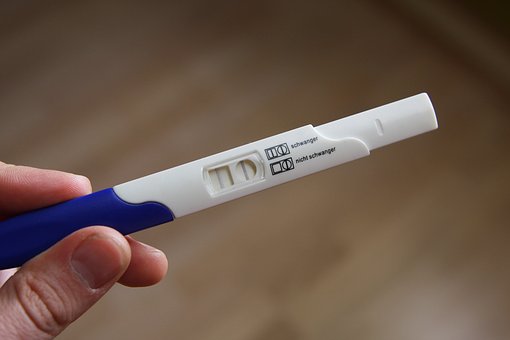
Pregnancy tests determine whether you are pregnant or not by trying to detect this hormone in either your blood or your urine. Urine tests can be carried out at home while blood tests are carried out by your local GP.

Positive Result

If you have just done a home pregnancy test and find that your test is showing a positive result, it is almost certain that you are pregnant. The test has positively detected the pregnancy hormone HCG in your urine.

Negative Result

A negative result can be slightly more ambiguous. It either means; you are not pregnant, you took the test too early so not enough hormone was present in your urine yet, or you took the test incorrectly. Be aware that some home pregnancy tests are more sensitive to detecting HCG than others.

What Should I do if I Take Multiple Tests and get Different Results?

In this circumstance, we recommended that you visit your GP and have a blood test done to get an accurate answer, however you will have to wait slightly longer to receive the results from this test.

If you find out that you are pregnant, why not book a First Encounter’s EarlyReassure™ scan? Available as soon as 7 weeks after conception, this is a scan you can attend before your first NHS scan to seek reassurance about numerous aspects of the pregnancy.

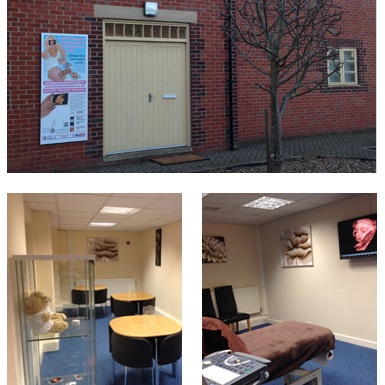
Swindon ultrasound clinic
 
We are sorry to announce that the First Encounters Ultrasound clinic in Swindon is no longer open.
 
If you were hoping to visit us, we would be more than happy to welcome you to our Cardiff clinic which is only a couple of hours from Swindon by car.
 
Here's our address:
Unit 1, Ground Floor
Brook House
Lime Tree Court
Mulberry Drive
Cardiff Gate Business Park
Cardiff
CF23 8AB
We look forward to seeing you! If you have any questions about our ultrasound clinic or the scan packages we offer, please don't hesitate to get in touch.